BPC-157 Australia: A Research-Only Sourcing and Verification Guide
September 27, 2026 · 15 min read
What does a high-purity result prove if the Certificate of Analysis doesn’t match the vial in front of you? For anyone comparing bpc 157 australia suppliers, the distinction matters: a percentage alone doesn’t confirm identity, batch traceability or suitability for a particular research purpose.
Supplier claims can be difficult to compare when reports are generic, methods aren’t stated or handling details are missing. This guide explains how to assess BPC-157 materials designated for laboratory research only, not human consumption. It focuses on evidence you can check, rather than therapeutic claims or marketing language.
You’ll learn how to match a vial’s lot number to its batch record, what HPLC results can and can’t establish, and which details to look for in an analytical report. The guide also explains how to assess Australian packaging and cold-chain delivery as fulfilment information, not proof of biological efficacy. The aim is to help you review documentation, analytical scope and handling records before drawing conclusions about a research material.
Key Takeaways
- When comparing bpc 157 australia listings, assess the specificity of the evidence, not just headline purity figures or broad supplier claims.
- Check whether the Certificate of Analysis identifies the tested material and method, reports a result, and matches the vial lot. A generic report doesn’t establish a batch match.
- Treat Australian packaging and cold-chain delivery as fulfilment details, not proof of stability, identity or biological effect.
- Before ordering, check the current listing, accessible batch records and stated intended use. BPC-157 is for laboratory research only, not human consumption.
- Aussie Peptides’ documented process includes synthesis by contract manufacturers, independent HPLC testing, matching Certificates of Analysis and online lot-number verification.
BPC-157 Australia: What research purchasers should establish first
BPC-157 sold as research material is not a medicine or a recommendation for human use. It is a peptide compound discussed in laboratory research. For bpc 157 australia sourcing, a research-use label describes the stated intended context. It doesn’t establish what is in a particular vial or whether the material suits a specific research protocol.
Assess the batch, not just the supplier description. A product page may outline sourcing or testing processes, but evidence for a vial should connect to its lot and be supported by records that identify the tested material and analytical method. A general certificate or a purity figure without a matching batch identifier leaves an important gap.
What does research-grade mean for BPC-157?
“Research-grade” is supplier terminology, not a conclusion you can verify from a label alone. It may describe material offered for laboratory research, but the phrase doesn’t independently establish composition, purity or suitability for a particular analytical procedure.
Look for evidence tied to the exact batch. Check whether the vial’s lot identifier matches the analytical record, and whether the report states what was tested, which method was used and what result was obtained. These details help you assess the scope of the evidence. They don’t turn a grade label into proof of human-use suitability.
What can a supplier claim actually prove?
A product-page statement is a supplier claim. An independently generated analytical record may offer more specific evidence, but only within the method’s scope and for the sample or batch identified. For example, a reported purity result doesn’t, by itself, confirm every aspect of identity or composition. Nor does it establish safety, efficacy or suitability for human use.
Read recovery, performance and treatment language carefully. It describes an asserted outcome, not batch traceability or an analytical finding. Keep these categories separate: marketing language isn’t a substitute for documentation, and a laboratory result isn’t evidence of a therapeutic effect.
For neutral background on the compound’s research history, consult this BPC-157 overview. Use it as context, not as a substitute for batch records or current Australian regulatory information from official sources. The practical starting point is to establish the intended research context, then verify what the records say about the specific vial.
BPC-157 batch verification: connect the vial to its analytical evidence
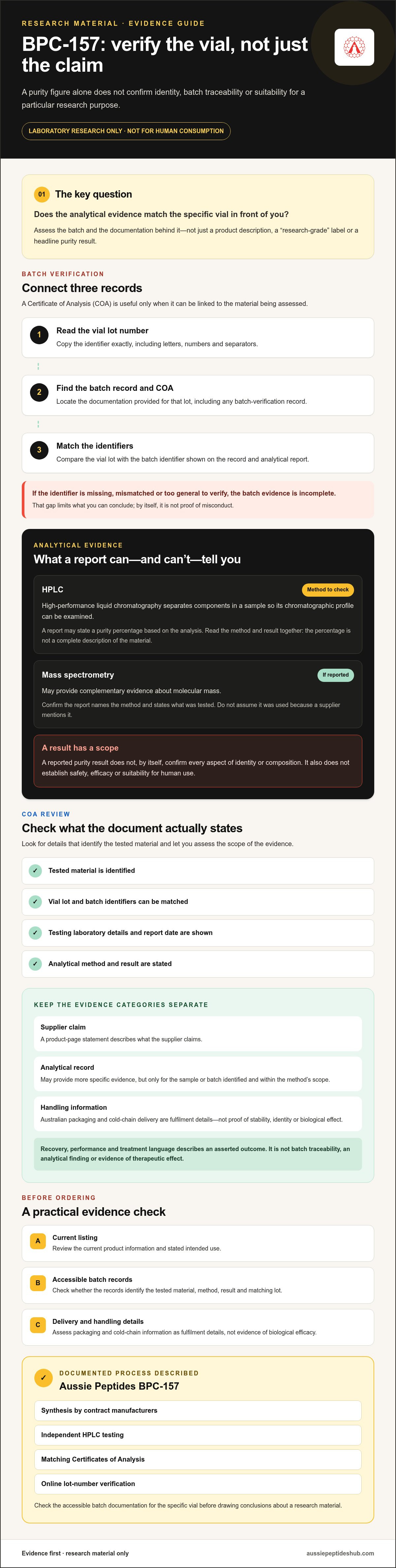
A Certificate of Analysis (COA) is useful only if you can connect it to the material being assessed. For bpc 157 australia listings, start with the vial lot number, then check that the batch record and analytical report refer to the same material. If a document can’t be tied to the vial, the batch evidence remains unresolved.
How to match a BPC-157 vial with its COA
Use this short review before relying on a report:
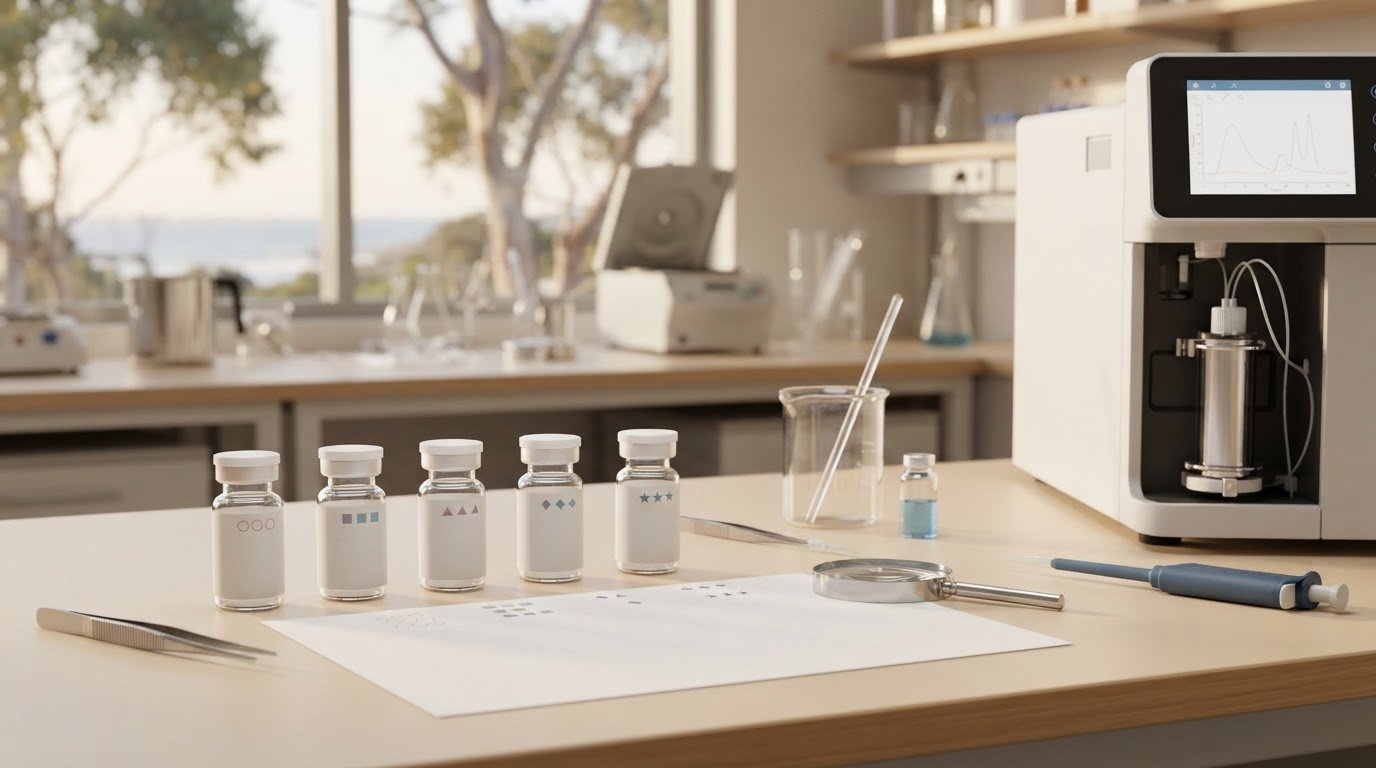
- Record the vial lot number. Copy it exactly, including letters, numbers and separators.
- Locate the batch record and COA. Check the supplier’s batch-verification page or the documentation provided for that lot.
- Compare the identifiers. Match the vial number against the batch identifier on the record and report.
Next, check the document itself. It should identify the tested material and show a report date, testing laboratory details, method and result. A report naming BPC-157 but lacking a batch reference may describe a related test without demonstrating that the vial came from the tested batch. If identifiers are missing, mismatched or too general to verify, treat the documentation as incomplete. That gap alone isn’t proof of misconduct, but it limits what you can conclude.
What HPLC and other analytical methods can show
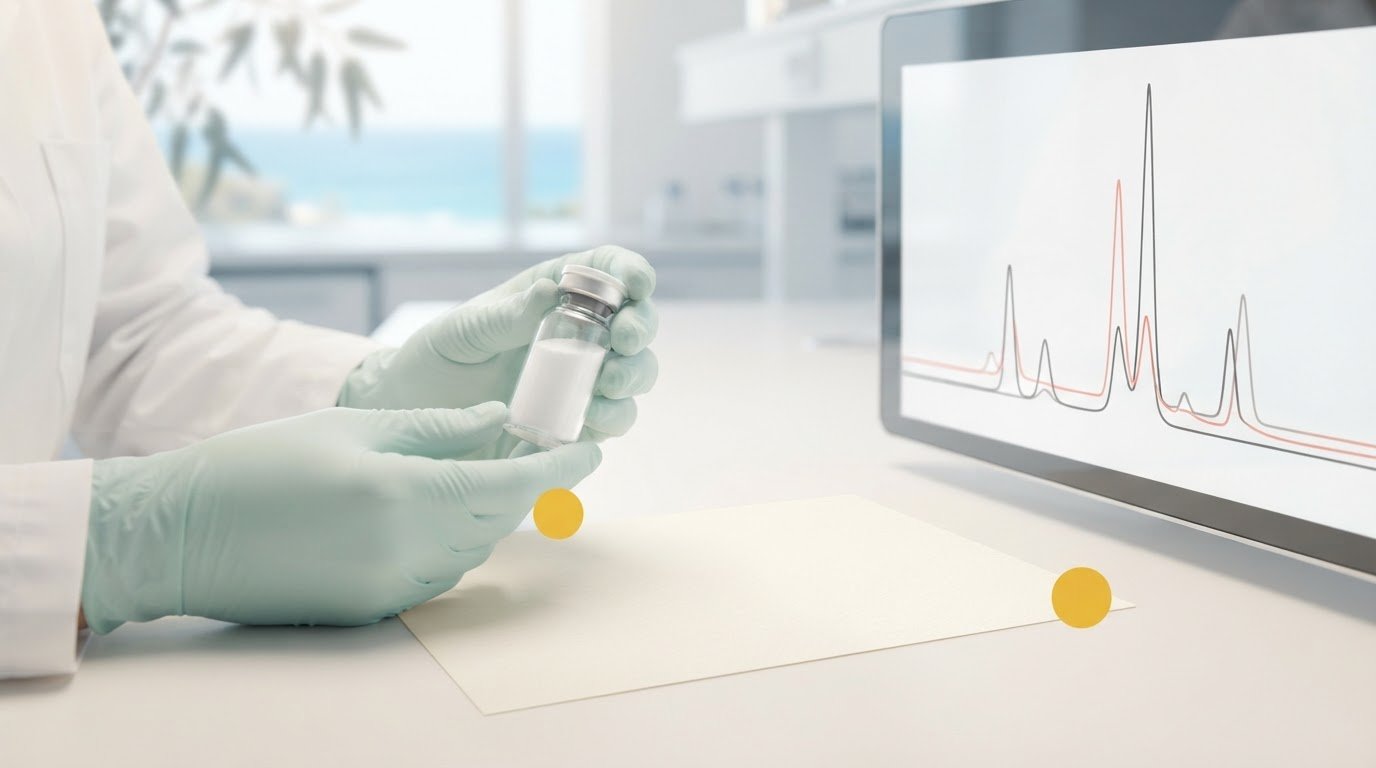
High-performance liquid chromatography (HPLC) separates components in a sample so their chromatographic profile can be examined. A report may present a purity percentage based on that analysis, but the result depends on the method and how the data are reported. Read the stated method and result together. Don’t treat a percentage as a complete description of the material.
Some reports may also use mass spectrometry, which can provide complementary evidence about molecular mass. Confirm that the report names this method and states what was tested. Don’t assume it was used just because a supplier mentions analytical testing generally.
An HPLC percentage alone doesn’t establish identity, sterility, safety or biological activity. It also doesn’t demonstrate suitability for human use. These are separate questions, and one reported result can’t answer them all. To assess the evidence, look for a report tied to the vial’s batch, with enough method detail to interpret its scope.
For a practical cross-check, compare the lot number on the vial with the online batch record and matching COA available through Aussie Peptides batch verification. Use the result to assess traceability, not to infer properties beyond the report.
Compare BPC-157 suppliers in Australia using evidence, not headline claims
A useful comparison asks each bpc 157 australia supplier the same questions. Focus on whether records are accessible, specific and connected to the material being assessed. The framework below compares evidence quality, not supplier rankings.
| Evidence area | What to compare | What the record can establish | What remains unproven |
|---|---|---|---|
| Batch matching | Can the vial lot number be matched to an online batch record and COA? | A consistent identifier supports traceability between the vial and the cited documentation. | It doesn’t independently establish every property of the material or how it was handled before testing. |
| Test method | Does the report name the tested material, analytical method, result and testing laboratory? | Specific method details help define what was analysed and what the reported result represents. | A named method or result alone doesn’t demonstrate sterility, safety, biological activity or suitability for human use. |
| Report access | Can purchasers access the report for the relevant batch, rather than a generic example? | A batch-specific, viewable report allows the stated identifiers and findings to be checked. | Access doesn’t prove that the report covers every quality question or that its findings extend beyond the tested sample. |
| Fulfilment handling | Are Australian packaging and delivery-handling details stated clearly? | Documented details describe aspects of packaging and dispatch, including whether cold-chain packaging is used. | Handling information alone doesn’t guarantee stability or establish identity, purity or efficacy. |
Which supplier details are independently checkable?
Start with records that can be matched to the supplied vial: a lot identifier, a batch-specific analytical report and clearly stated method details. An accessible report gives you more to check than a product-page statement alone. Distinguish these records from advertising language about quality or performance. A claim may describe a supplier’s position, but it isn’t independent analytical evidence unless a relevant, inspectable document supports it.
Why purity claims are not a complete quality comparison
Purity percentages aren’t directly comparable when reports use different or undisclosed methods, sample preparation or reporting conventions. Before interpreting a number, compare the method and the scope of the report. Keep identity, purity, sterility and intended use as separate assessment questions. A result addressing one doesn’t settle the others.
Supplier documentation also doesn’t determine regulatory status. For current Australian information, check official Therapeutic Goods Administration sources. This comparison is a record-review framework, not legal advice.
Before ordering BPC-157 in Australia: check records and delivery handling
For bpc 157 australia listings, a pre-order check should cover both the product records and fulfilment details. A research-use label doesn’t replace batch documentation or settle regulatory questions. Confirm that the material is explicitly designated for laboratory research only, not human consumption, and check current Australian regulatory information through official sources such as the Therapeutic Goods Administration before proceeding. This section is a records checklist, not legal advice.
What to verify before checkout
- Read the current listing. Confirm the material name and stated intended use. Don’t infer suitability from a product category or general supplier description.
- Check the batch record. Look for a record and Certificate of Analysis (COA) for the relevant batch. Compare the batch identifier with the vial identifier shown in the available product information.
- Review delivery terms. Check current domestic dispatch, delivery and handling details. Don’t assume transit conditions are identical for every order or location.
- Read the storage documentation. Find the product-specific laboratory storage instructions before deciding whether the material fits the planned research workflow.
If the lot record or COA isn’t accessible, or the identifiers don’t align, pause and seek clarification before relying on the documentation. Technical questions about handling or use belong within appropriate laboratory procedures. This guide doesn’t provide dosing, reconstitution or self-administration instructions.
How to assess cold-chain and storage information
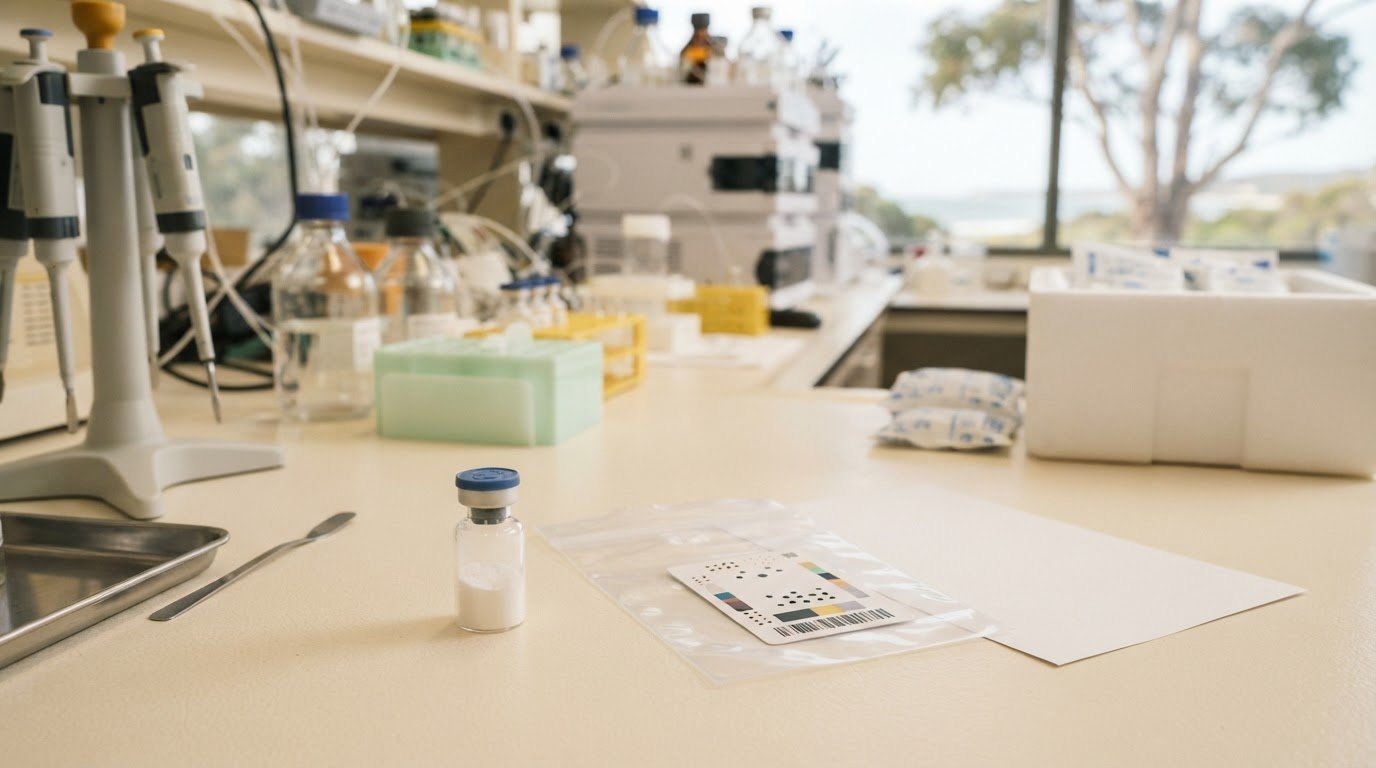
Cold-chain packaging is a handling measure. Check what the supplier says about packaging and dispatch, then compare that information with the product-specific laboratory storage documentation. Don’t assume that cold-chain shipment guarantees a particular stability period or proves the material’s identity, purity or efficacy.
Keep handling records separate from analytical records. A COA addresses the tested sample and its reported results; fulfilment information describes packaging and delivery processes. Each provides different evidence, and neither should be treated as a substitute for the other.
Aussie Peptides states that it packages products in Australia and uses cold-chain packaging for national shipping. Check the current BPC-157 listing, linked batch record and handling information for the batch under consideration.
To apply this checklist, review the BPC-157 listing and batch records and compare the available information with your laboratory requirements.
Aussie Peptides BPC-157: documented sourcing and the next step
For bpc 157 australia sourcing, use the same decision rule for every listing: match the vial’s lot number to its batch record, assess the analytical method and result, then review the stated handling details. Documentation supports specific checks. It doesn’t establish therapeutic effects or suitability for human use.
What Aussie Peptides documents for BPC-157
Aussie Peptides states that its peptides are synthesised by contract manufacturers, independently tested using HPLC and packaged in Australia. BPC-157 is supplied for laboratory research only, not human consumption. The business also states that products have matching Certificates of Analysis (COAs), with batch details available for online verification using the vial lot number.
Before relying on a particular report, confirm that the current batch record matches the lot identifier. Review the report date, testing laboratory, method and stated result, and consider the scope of the findings rather than treating an HPLC percentage as proof of every material property. National cold-chain shipping is a fulfilment detail, not a guarantee of stability, identity or efficacy.
How to review the current BPC-157 listing
Check the current product listing and linked batch records before making a decision. Confirm the stated research-use restriction, record the vial lot number and compare it with the online batch entry and COA. If a document is missing, identifiers differ or the testing method is unclear, treat the evidence as unresolved and seek clarification rather than filling the gap with assumptions.
Review the available packaging, dispatch and storage information against your laboratory procedures. These records serve different purposes: analytical documents describe testing, while handling details describe fulfilment. Neither should be read as evidence of human-use suitability.
Before proceeding, review the current BPC-157 research listing and its available batch documentation. Any assessment should remain within the stated laboratory research context. The product is not for human consumption.
Make the batch record your next checkpoint
For bpc 157 australia sourcing, follow a clear decision rule: match the vial lot number to its batch record, assess the analytical method and result, then review handling information. A purity percentage alone can’t establish identity, sterility, safety or suitability for human use. Keep the stated research-only purpose separate from any therapeutic claim.
Aussie Peptides states that BPC-157 is independently HPLC-tested, supplied with a matching batch Certificate of Analysis and verifiable online using the vial lot number. Australian packaging and national cold-chain shipping describe fulfilment processes; they don’t prove efficacy or guarantee stability. Check the current listing and batch documentation, and confirm the report’s scope before drawing conclusions.
Review the BPC-157 research listing and available batch documentation before proceeding. The material is for laboratory research only, not for human consumption. Checking identifiers, methods and handling records gives you a clearer basis for assessing the documentation.
Frequently Asked Questions
Is BPC-157 approved for human use in Australia?
Check current Therapeutic Goods Administration (TGA) information before drawing a conclusion about BPC-157’s regulatory status. A supplier listing or analytical report doesn’t establish approval, safety or suitability as a medicine. Aussie Peptides supplies BPC-157 for laboratory research only, not human consumption. For current regulatory information, consult official Australian sources. For personal health questions, speak with a qualified health professional rather than relying on supplier descriptions or research-material documentation.
Can I buy BPC-157 in Australia for research?
Whether you can buy BPC-157 for research depends on current Australian requirements and the circumstances of the specific product. Check official TGA information rather than relying on supplier wording or online discussions. Aussie Peptides labels its BPC-157 for laboratory research only, not human consumption. A research-use label isn’t confirmation of legal status. This information isn’t legal advice and doesn’t provide dosing or personal-use instructions.
What should a BPC-157 COA show?
A useful Certificate of Analysis (COA) identifies the material and batch, gives a testing date, names the analytical method and reports the result. Check that its batch identifier matches the lot number on the vial. A report is easier to assess when it clearly identifies the tested sample and explains the method used. A COA alone doesn’t prove safety, efficacy, sterility or suitability for human consumption.
Does an HPLC purity result prove BPC-157 is safe or effective?
No. An HPLC report describes analytical characteristics under a stated method, and its findings should be interpreted within that method’s scope. A purity figure doesn’t independently prove identity, sterility, safety, efficacy or suitability for human use. Check that the report matches the relevant batch and provides enough method detail to understand the result. Laboratory documentation isn’t medical evidence and can’t establish a therapeutic outcome.
How can I verify that a BPC-157 COA matches my vial?
Read the lot number printed on the vial, locate the corresponding batch record, then compare the identifiers. Check that the report names the material and includes testing details such as the method and result. If identifiers differ or the report is generic, treat the match as unconfirmed and ask the supplier for clarification. A matching identifier supports traceability, but doesn’t by itself prove safety or suitability.
How should research-grade BPC-157 be stored after delivery?
Follow the storage instructions provided for the specific product and its documented form. Don’t assume general advice applies to every batch or laboratory setup. On receipt, review the packaging and delivery information, then record handling concerns according to your laboratory’s procedures. If the product-specific documentation doesn’t provide enough information, seek clarification before deciding how to handle it. Storage guidance doesn’t establish stability beyond the documented conditions.
Does cold-chain delivery guarantee BPC-157 quality?
No. Cold-chain packaging is a handling measure, not proof of identity, purity, sterility or efficacy, and it doesn’t guarantee uninterrupted temperature control. Assess delivery details alongside the batch-matched analytical documentation and the supplier’s stated handling process. If a shipment appears compromised, follow the supplier’s current reporting process and applicable laboratory quality procedures before using the material in research. Keep fulfilment evidence separate from analytical findings.