Peptides, proteins and amino acids
Amino acids are the individual units. Link a handful together with peptide bonds and you have a peptide; link dozens or hundreds and the chain folds into a three-dimensional shape and is called a protein.
The boundary is a convention rather than a hard rule — around 50 amino acids is the usual dividing line. What matters practically is that short chains are small enough to synthesise reliably, purify to a high standard, and characterise precisely.
Because the sequence determines the molecule, two vials labelled with the same peptide name should be chemically identical. Whether they actually are is what analytical testing establishes.
How research peptides are made
Most are produced by solid-phase peptide synthesis: the chain is built one amino acid at a time on a solid resin support, then cleaved off and purified.
Synthesis is never perfect. Incomplete couplings leave truncated chains, and side reactions leave modified ones. Purification — usually preparative HPLC — separates the target peptide from those by-products.
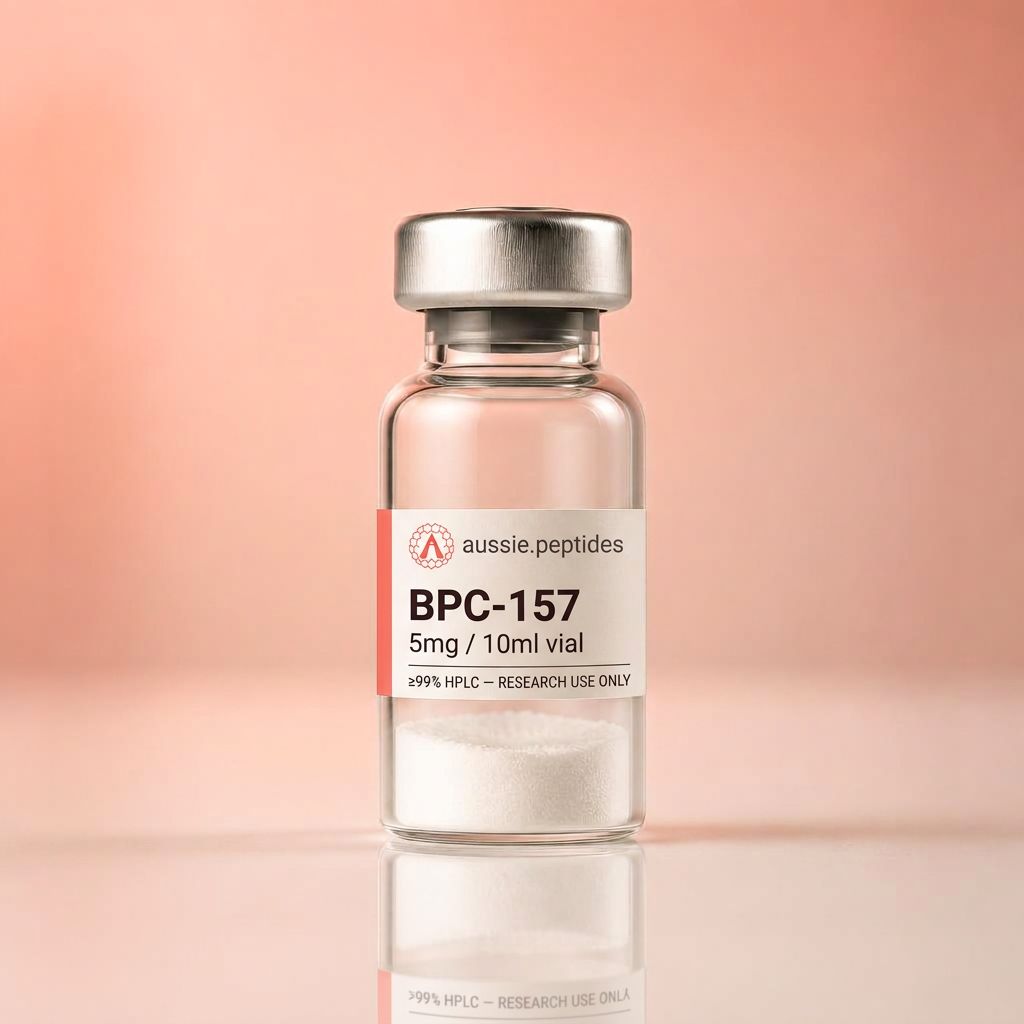
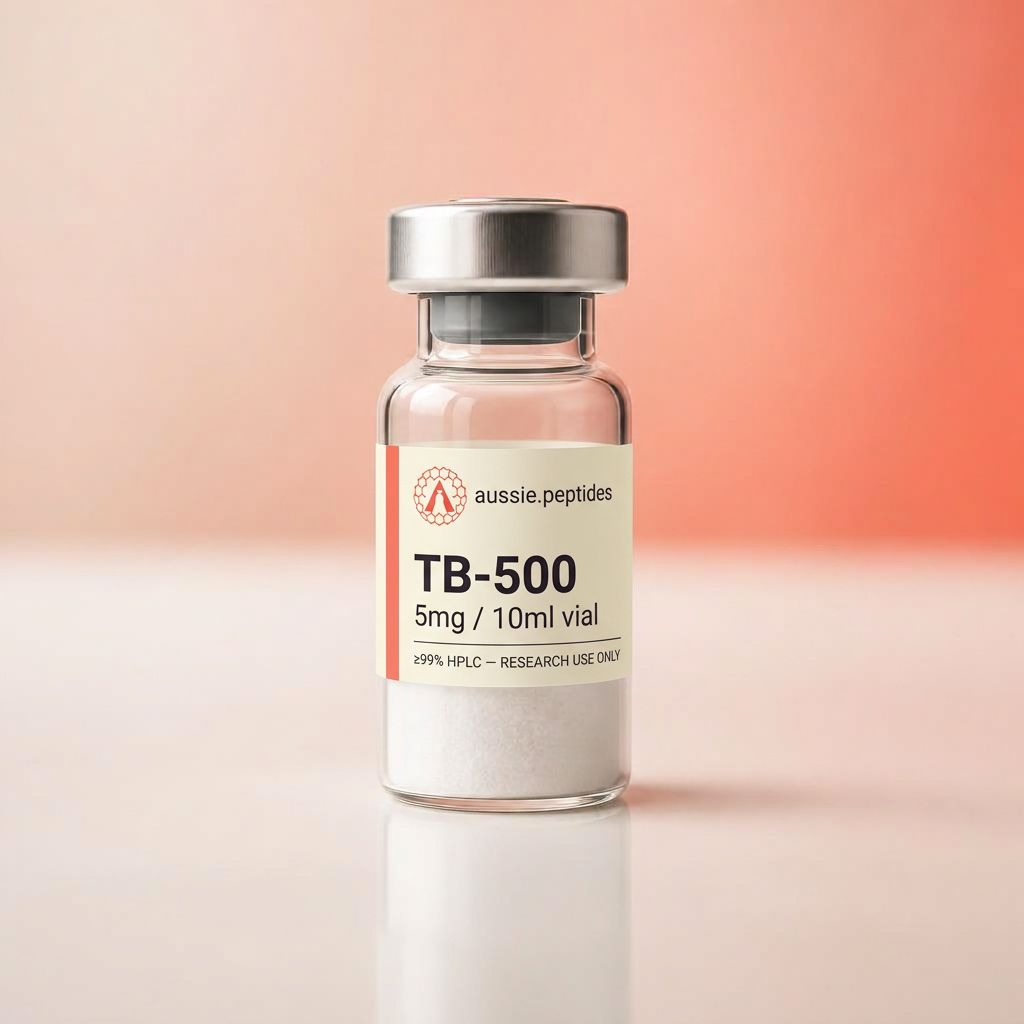
The purified material is then lyophilised, freeze-dried into the stable white cake you see in the vial, because peptides in solution degrade far faster than peptides as dry powder.
What "HPLC ≥99%" actually tells you
High-performance liquid chromatography pushes the sample through a column that separates compounds by how strongly they stick to it. Each compound emerges at its own time and registers as a peak.
Purity is reported as the target peak's area as a percentage of all peak area. "≥99%" means at least 99% of what the detector saw was the intended peptide.
HPLC tells you how pure, not what it is. Identity is confirmed by mass spectrometry, which measures the molecular weight and checks it against the expected sequence. A credible Certificate of Analysis carries both, and it carries a lot number that matches the vial in your hand.
A CoA with no lot number, no date and no lab name is decoration. That is the single most useful thing to check when comparing suppliers.
Peptides are not SARMs, steroids or supplements
SARMs are small synthetic molecules that bind androgen receptors — a completely different chemical class, despite often being sold alongside peptides.
Anabolic steroids are steroid-ring molecules, also unrelated structurally.
Cosmetic "peptide" serums contain peptides too, but at trivial concentrations and formulated for topical use. Research-grade lyophilised material is a different product for a different purpose.
Working with a vial in the lab
Vials arrive cold-chain packed as dry powder. Store lyophilised material at -20°C for the long term, or 2-8°C briefly before reconstitution.
Reconstitute with bacteriostatic water added slowly down the inside wall — never straight onto the powder cake, and never by shaking, which shears the chain.
Concentration is simply peptide mass divided by the water volume you added: 2mL into a 5mg vial gives 2.5mg per mL. Label the vial with the date, volume and lot so results stay traceable.
What to check before buying in Australia
A lot-matched Certificate of Analysis from an independent laboratory, not an in-house claim of purity.
Stock physically held in Australia, so nothing crosses a border after you pay.
Cold-chain packaging on dispatch, and a supplier who will tell you the batch number before you order.
Research-only framing. A site that publishes dosing protocols is telling you it is not operating within Australian rules.
Legal status in Australia
Materials on this site are supplied strictly for in-vitro laboratory research. They are not therapeutic goods, are not approved by the TGA for human use, and are not supplied for human or veterinary consumption.
Purchasers must be 18 or over and are responsible for handling, storing and disposing of research materials in line with their institution's requirements and applicable Australian law.
Nothing on this page is medical advice, a dosing protocol, or a claim of therapeutic benefit. It summarises what the published research literature investigates.
Common questions
A short chain of amino acids — the same building blocks proteins are made from, joined in a sequence of roughly 2 to 50 units instead of hundreds.
Chain length, and therefore structure. Peptides are short and relatively simple; proteins are long chains that fold into complex three-dimensional shapes. The dividing line is conventionally around 50 amino acids.
No. Peptides are amino-acid chains. SARMs are small synthetic molecules that act on androgen receptors — a different chemical class entirely, even though some suppliers list them side by side.
In a chromatographic separation of the batch, at least 99% of the total detected peak area was the target peptide. It measures purity, not identity — mass spectrometry confirms the molecule is the right one.
Lyophilised powder is stored frozen at -20°C for the long term, or refrigerated at 2-8°C short term. Once reconstituted, vials are refrigerated at 2-8°C, kept out of light, and not repeatedly frozen and thawed.
Because purification is the expensive step. Crude synthesis output can be well under 90% target peptide; getting it above 99% takes preparative chromatography and independent verification, and both cost money that some suppliers skip.
Peptides checklist & safety notes.
A one-page laboratory checklist for Peptides: reconstitution volume and concentration arithmetic, storage and freeze-thaw handling, lot record-keeping, packaging inspection on arrival, and the CoA checks to run before you open a vial. Research use only — no human dosing protocols.
One email, no list sharing. 18+ research use only.